
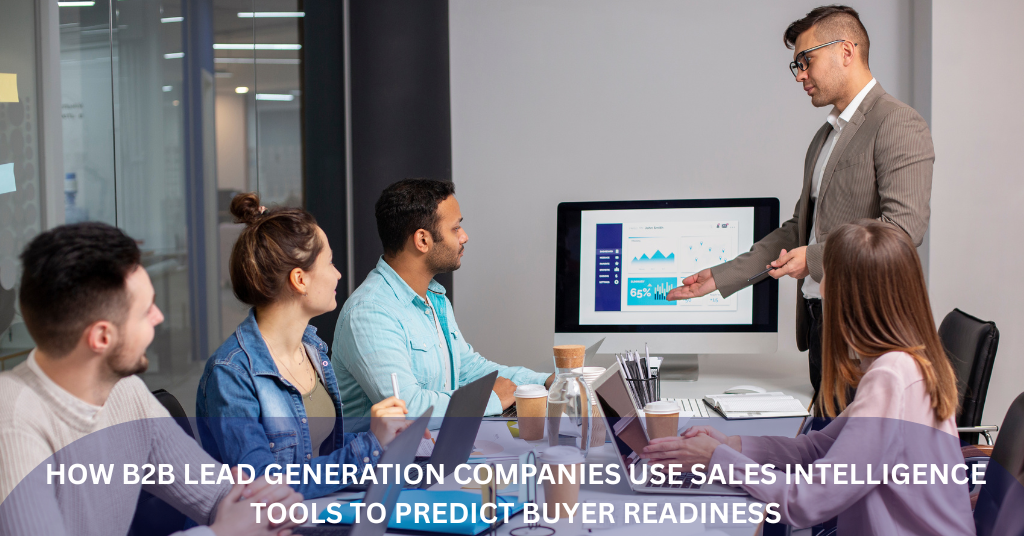
Selling in the B2B environment doesn’t demand sales skills alone. It also requires you to time your strategy well. That’s because even the most accurate lead data can fail to deliver if you approach a lead too early or too late.
Now, you can time your moves perfectly only when you know or can predict buyer preparedness. But that’s where the challenge kicks in. For decades, companies have struggled to determine whether a prospective buyer is really ready to engage.
However, B2B lead-gen companies flip the script. While utilizing their expertise, they leverage sales intelligence tools to predict the preparedness of a particular buyer.
Challenges of Predicting Buyer Readiness Based on Instincts
Impulses might have worked in the past. But today’s buyer is as dynamic as the business environment. Yet, many organizations rely on instincts to predict buyer preparedness. Experience surely is a valuable asset. However, depending on it solely can introduce some challenges, including;
1. Inconsistent Perspectives: Each representative may have a different sales instinct. While one considers a lead hot, the other may not. Such a disconnected approach often leads to ineffective decision-making and missed opportunities.
2. Incomplete Data Visibility: Manual analysis usually depends on superficial indicators like filling out contact forms, emails, etc. It doesn’t consider deeper signals such as intent behaviors, competitor research, or organizational changes.
3. Delays: Reviewing and analyzing leads manually can take time. This can also delay responses. So, by the time your executive notices or identifies interest, the buyer may already have proceeded with your competitor.
4. Inability to Prioritize Leads: The lack of predictive insights makes it challenging for sales teams to prioritize leads. It can result in inefficient pipelines and lower conversion rates, letting opportunities go down the drain.
The above challenges make it evident that companies now need more than just reviews and analysis. They must leverage B2B lead generation services that employ sales intelligence tools to forecast buyer readiness. Let’s see how they do it.
6 Ways B2B Lead-Gen Companies Predict a Buyer’s Inclination with Sales Intelligence Tools
Modern tools and platforms eliminate guesswork, unlocking profound, analytical insights that pave the way to more productive outcomes. B2B lead-gen leads the way by using them correctly in the following ways.
1. Tracking Buyer Intent Signals Across the Web
While computing a buyer’s preparedness, you must discover or decode a buyer’s intent signals beyond your website.
Sales intelligence tools help you do that by tracking content consumption, keyword searches, competitor comparisons, and industry research activity.
A lead or a company showing interest in your offerings indicates their entry into the active buying phase. Lead-gen teams decipher these signals to identify potential leads.
Partner with Demand Fluence for data-driven B2B lead generation that uses sales intelligence to predict buyer readiness and drive higher conversions
2. Analyzing Engagement Patterns
A single action seldom signals buying intent. Relying on it alone and chasing the lead isn’t always a prudent idea. Sales intelligence tools analyze patterns over time. These patterns include a user’s visit frequency, the extent of content engagement, and multiple stakeholders interacting with sales and marketing assets at different levels.
Sales intelligence tools consider and analyze these patterns to differentiate between or filter casual and serious leads, helping you prioritize what matters.
3. Using Predictive Scoring Models
Earlier, many companies used static rules to assign lead scores. But amid the changing environment, you must use predictive scoring that uses ML to evaluate leads based on historical conversion data. These models keep up with changing market dynamics to learn which firmographics, behaviors, and engagement signals correlate with closed deals. Thus, you use scores to identify leads most likely to convert and spend time nurturing them.
4. Identifying the Right Engagement Moment
As stated earlier, the time when you engage with a lead matters. Reach out too early, and the lead will park your proposal. Approach too late, you may have missed the bus! But sales intelligence tools provide real-time alerts when a prospect shows a surge in buying activity. Thus, you engage with prospects just when they’ve reached the pinnacle of their buying intent.
5. Personalized Outreach
While timing is crucial, learning what to offer when it is time is even more critical. Sales intelligence platforms reveal what topics, pain points, or competitors a prospect is exploring. It helps you tailor your communication style, content, and approach to resonate with the prospect’s needs and intent.
6. Continuously Refining Readiness
Sales intelligence platforms evolve with the market. Thus, they help you continuously refine preparedness and adapt your strategy to the changing environment. So, you connect with buyers when it is time, with a competitive proposal.
Final Words
Amidst the ever-evolving business landscape, accurate timing, smarter proposals, and nurturing leads more meaningfully help you tap into more prospects and opportunities. Lead-gen companies like Demand Fluence help do it with sales intelligence platforms. We are an experienced lead generation company in India with unparalleled technology and market expertise that culminate in better lead flow, engagement, and measurable outcomes. So, partner with us to drive a visible difference. Email us at hi@demandfluence.com to connect with our experts.